Montgomery’s growth from a riverfront trading post to a modern capital meant building on a complex mix of alluvial terraces and weathered Cretaceous sediments. The Alabama River carved deep channels through the Selma Group Chalk, leaving behind layers of gravel, sand, and stiff clay that respond unpredictably to water. Any project that goes deeper than a few feet—whether it’s a new riverfront structure, a stormwater basin, or a deep foundation in the downtown area—needs to know how water moves through those layers. That’s where a field permeability test becomes essential. Rather than guessing from lab curves, we run Lefranc tests in boreholes to measure hydraulic conductivity directly in the saturated zone. For rock formations encountered near the Fall Line, we apply the Lugeon method to assess fracture flow under pressure. Both approaches give the design team real numbers to work with, not textbook estimates. Before committing to a dewatering plan or a cutoff wall design, it’s smart to pair these results with a grain size analysis of the materials encountered, so the particle distribution backs up the in-situ readings.
A single Lugeon test in fractured Selma Chalk tells you more about real seepage risk than a dozen lab permeameter runs on intact samples.
How we work
Local context
The Selma Group Chalk that underlies much of central Montgomery is notorious for solution cavities and open fractures—features that standard sampling can miss but a Lugeon test will catch immediately through sudden pressure drops or high water takes. In the alluvial terraces along the Alabama River, thin silt lenses create perched water tables that confuse excavation plans; a Lefranc test run at multiple depths tells you exactly which zone is feeding water into your cut. The biggest risk we see on commercial sites isn’t total collapse—it’s the slow, cumulative damage from uncontrolled seepage: slab heave in parking decks, mold in below-grade mechanical rooms, or slope softening behind retaining walls near the interstate corridors. IBC Section 1803 requires a foundation investigation that includes groundwater evaluation where conditions warrant it, and ASCE 7 emphasizes the same for load combinations involving hydrostatic pressure. A few hours of testing during the site investigation phase eliminates the uncertainty that leads to expensive change orders later.
Relevant standards
ASTM D6391 - Standard Test Method for Field Measurement of Hydraulic Conductivity, IBC Section 1803 - Geotechnical Investigations, ASCE 7 - Minimum Design Loads (hydrostatic considerations), USBR 6510 - Pressure Testing (Lugeon) procedures
Additional services
Lefranc Permeability Tests in Boreholes
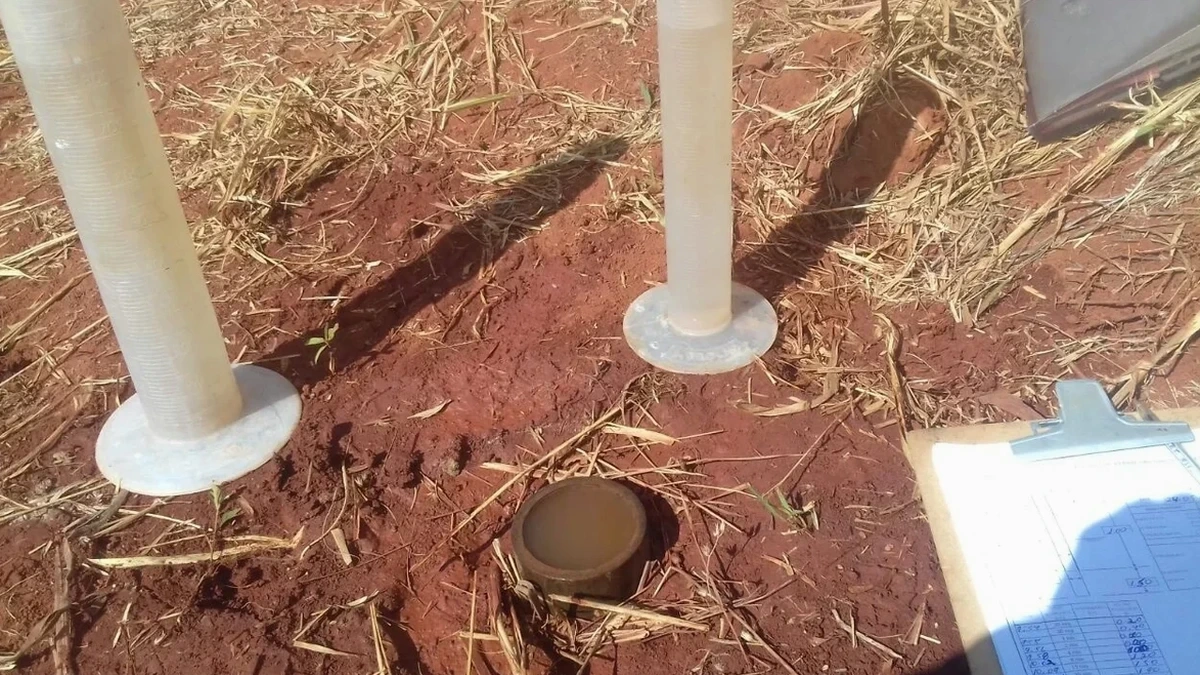
Constant and falling head tests in soil boreholes. We isolate the test zone with a slotted casing and measure flow rates to calculate hydraulic conductivity directly. Ideal for dewatering design, infiltration basins, and cut slope assessment.
Lugeon Packer Tests in Rock
Five-stage pressure tests in NQ or larger core holes. We use pneumatic packers to isolate fractured intervals and record pressure-flow relationships. Essential for dam foundations, tunnel alignments, and grouting program design in the Piedmont bedrock.
Combined Soil-Rock Permeability Profiles
For sites with mixed conditions—common near the Fall Line—we run Lefranc tests in the overburden and switch to Lugeon tests once rock is encountered. A single report delivers a complete permeability profile from surface to design depth.
Typical parameters
Quick answers
What’s the difference between a Lefranc test and a Lugeon test?
The Lefranc test measures hydraulic conductivity in soil by injecting or extracting water through a slotted casing in a borehole. The Lugeon test is specifically for fractured rock—it uses inflatable packers to isolate a section and applies water pressure in five steps to assess fracture flow, hydraulic jacking, and long-term permeability. We use Lefranc for overburden and Lugeon once we hit competent rock.
How much does a field permeability test cost in Montgomery?
A typical Lefranc or single-interval Lugeon test in our Montgomery projects runs between US$710 and US$940 per test interval, depending on depth, access, and whether it’s combined with other drilling work. Multi-level packer setups or deeper holes can shift the cost upward, but we give a firm number after reviewing the site logistics.
How many test intervals do I need for my site?
It depends on the stratigraphy. For a uniform sand layer, two or three Lefranc tests at different depths may be enough. In fractured chalk or gneiss, we recommend a Lugeon test every 15 to 20 feet of rock, especially where core recovery is poor or fractures are visible. We can help map out a testing plan once we see the boring logs.
Can you run these tests in existing monitoring wells?
Lefranc tests can sometimes be adapted to monitoring wells if the screen length and filter pack are suitable, but we prefer purpose-drilled boreholes because we can control the test zone more accurately. Lugeon tests require core holes with competent rock and a packer seal, so existing wells are rarely usable for that method.
How long does a typical permeability test take?
A single Lefranc test usually takes one to two hours once the borehole is ready, including setup, saturation, and running both head configurations if needed. A Lugeon test with all five pressure stages runs about 90 minutes per interval. We typically schedule a full day for a profile with three or four test zones, including rig time and data processing.