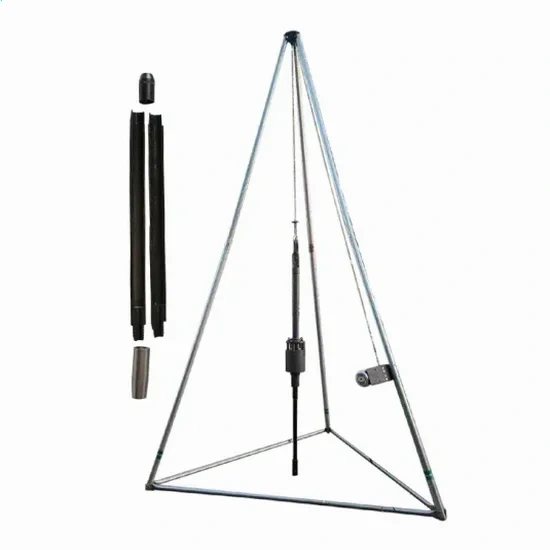
A five-story office build off Dexter Avenue hit refusal at 18 feet last spring. The contractor assumed weathered Selma Chalk would carry the load. It didn't. The drill rig stopped dead on a limestone lens nobody mapped. We ran a full SPT program the next week. N-values jumped from 12 to refusal across 40 horizontal feet. That's Montgomery geology — unpredictable transitions between Coastal Plain sediments and hard Cretaceous limestone. The standard penetration test isn't optional here. It's the baseline for every foundation decision east of I-65, west of the bypass, and anywhere near the Alabama River bluffs. When we mobilize our CME-75 rig, we're logging blow counts, sampling splits, and watching for the contact zones that catch engineers off guard. Combining SPT with seismic refraction helps map those hidden rockheads before the auger finds them the hard way.
Montgomery's Cretaceous limestone can send N-values from 15 to refusal in less than three vertical feet. Grid-based SPT programs miss that transition routinely.
How we work
Local context
Montgomery sits in Seismic Design Category B, but the soil profile tells a different story than the maps suggest. The IBC Site Classification depends entirely on SPT N-values in the upper 100 feet. Loose alluvium near the Alabama River floodplain can drop a site into Class E or F if the soft zone is thick enough. That changes the seismic design parameters — and the foundation cost — overnight. We've seen projects along the Selma Highway corridor where 20 feet of stiff clay overlie 30 feet of loose sand with N-values under 8. That's a classic amplification hazard. No amount of structural engineering fixes bad ground characterization. The standard penetration test is your first line of defense against site class downgrades that kill budgets. Run it deep. Run it right. Don't let a thin stiff crust hide what's underneath.
Video overview
Relevant standards
ASTM D1586 - Standard Test Method for SPT and Split-Barrel Sampling of Soils, ASTM D2487 - Practice for Classification of Soils for Engineering Purposes (USCS), IBC - International Building Code (Site Classification Chapter 16), ASCE 7 - Minimum Design Loads and Associated Criteria for Buildings
Additional services
Commercial Building SPT
Deep borings for office, retail, and industrial projects. We target 60 to 100-foot depths where IBC site class determination requires it. Reports include N60 profiles and stratum descriptions keyed to Alabama Coastal Plain geology.
Civil Infrastructure Borings
Bridge approach borings, roadway subgrade investigations, and retaining wall SPTs. We work along ALDOT corridors and municipal right-of-ways with traffic control and utility clearance coordinated in advance.
Residential and Light Commercial
SPT borings for slab-on-grade and shallow foundation design. Typical depth 20 to 40 feet. Fast turnaround — usually 48 hours from rig demob to preliminary log delivery.
Typical parameters
Quick answers
How much does SPT testing cost in Montgomery AL?
Most projects in Montgomery run between US$500 and US$860 per boring, depending on depth, access, and whether we need traffic control. Deeper borings past 60 feet or sites with difficult access push toward the upper end. We quote per boring after reviewing your site plan and proposed foundation layout.
How deep do SPT borings need to go for IBC site classification?
IBC Chapter 16 requires borings to extend 100 feet below grade or to refusal, whichever comes first. In Montgomery, refusal on limestone often occurs between 30 and 70 feet. We always coordinate depth requirements with your structural engineer before mobilizing.
What's the difference between SPT and CPT testing?
SPT gives you a disturbed soil sample and N-value at discrete intervals. CPT provides continuous sleeve friction and tip resistance without sampling. For Montgomery sites with soft alluvium or variable fill, we often recommend SPT for soil identification and CPT for stratigraphic continuity between borings. They complement each other.
How quickly can you deliver SPT results?
Preliminary blow count logs go out within 48 hours of demobilization. Final reports with lab classification, N60 corrections, and engineering recommendations typically take 5 to 7 business days. We can expedite for an active excavation waiting on data.